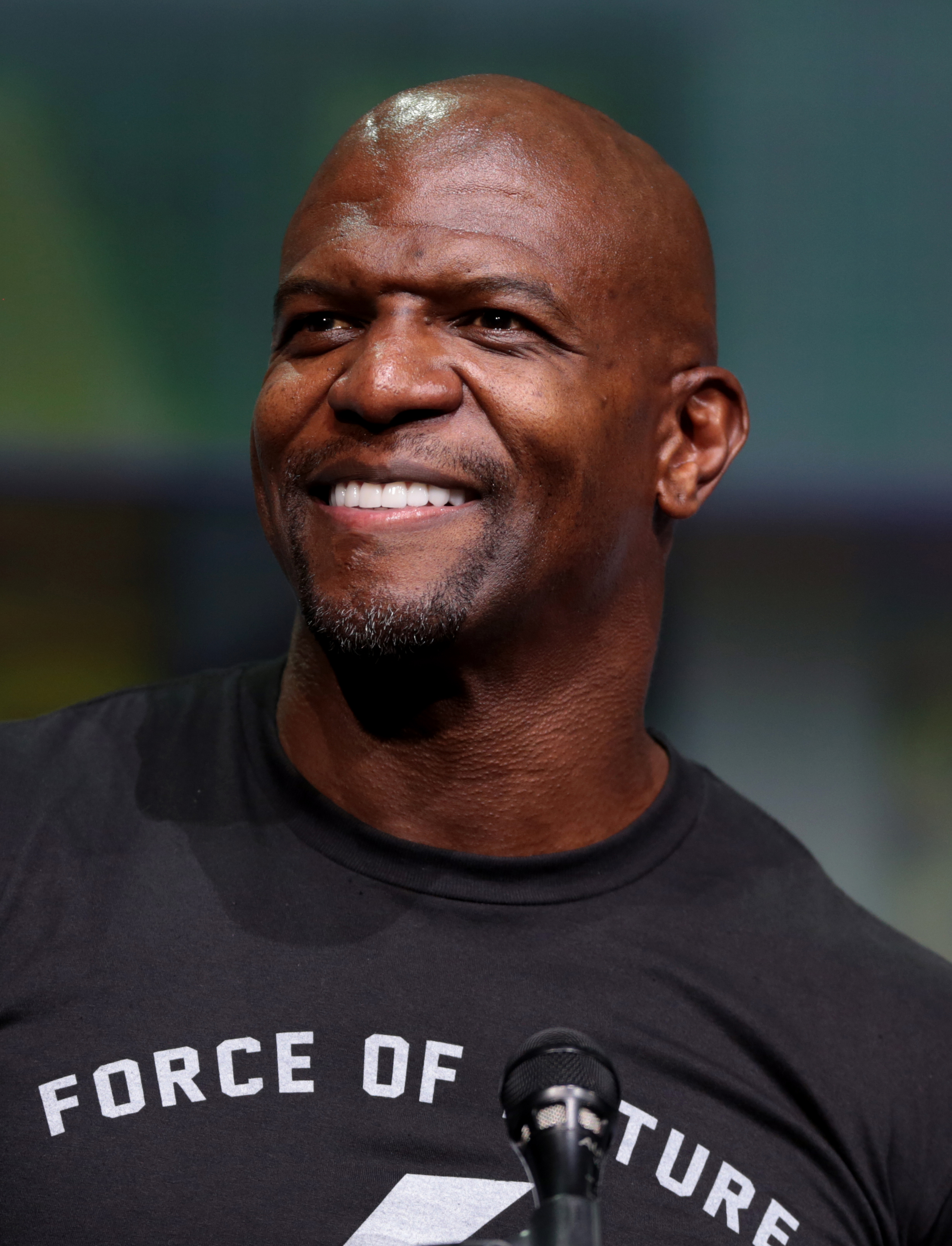
In the interview, Terry describes what he terms 'negotiating with terrorists', giving an example of a time he allowed a football coach to call him Tyrone (rather than Terry) so as not to risk his football scholarship by challenging the man with the power to take away that scholarship. Terry talks about having to do these kinds of negotiations again and again, from negotiating with his abusive father to negotiating with gang members and drug dealers on the streets of Fling Michigan and dealing with egos in Hollywood.
This kind of power imbalance is something I think anyone in the first world middle class with find familiar. The kind of petty bullying and power struggles we hoped would end with graduation, but continued into performance reviews and managerial coaching sessions as failed authors and actors and musicians and athletes and entrepreneurs take out their bitterness on the people they now manage at Wal-Mart and Best Buy and they various cubicle farms where they has brown nosed their way up the ladder enough to abuse power by 'managing' those below them on the org chart.
We are slaves to the people who have power to take away our livelihood. Freedom is all about power and negotiation with the one who has the power to harm us.
In his book The World Until Yesterday, Jared Diamond describes the strategy used by many tribal gardening peoples whereby they tend multiple gardens in different climates and ecosystems as a defense against blight or bug or bad weather. In the Rich Dad, Poor Dad series of books, author Robert Kiyosaki returns again and again to his definition of asset and liability. Kiyosaki like to say that "assets will feed you, liabilities will eat you". When the weather goes bad, a garden will fail. A bad frost could end your livelihood. If you have only one garden or work in your master's garden, a bad harvest could kill you. Not relying on any one garden is freedom. Having your own gardens is freedom.
Your safety (and mine as I don't do this full time yet) is almost certainly dependent upon your master. A truly free person retains the ability to walk away. A truly free person is responsible for their own life and carries their life in their own hands. How did we get to the point where the term, "taking your life into your hands" is a cautionary saying? How many slave owners had to convince us of how many lies before being in control of our own lives become thought of as a liability? Get a good job with good benefits? how did find a good master to become a slave to become accepted advice to give to young people?
And having a garden or two is not enough. Jared Diamond notes that tribal peoples general had an average of seven gardens (seven is important, you'll see that number a lot here). To switch metaphors to video games such as the Legend of Zelda, multiple gardens are like the health meter or the heart containers in a video game system. They represent your ability to take hits and keep going. The ability to provide for yourself is integral to your person power, to your ability to walk away from a bad situation, to turn down a bad deal, to take a hit and keep going towards a goal.
But more important than having gardens, is having the ability to plant gardens, to make your own livelihood and remake it as needed. This is why the Canadian government worked so "to kill the Indian in the child[.]" when they instituted the Residential School system. This is why kings typically bond serfs to the land and why slave owners don't want slaves learning how to read. If you can make your own livelihood, then escape is possible.
You need the ability to plant your own garden.
Anything less and you're a slave.
Most of us are.
And most of us feel threatened when other slaves reach for freedom. People remember failures in the short term and success in the long term. People hide from freedom out of fear of failure. People are afraid of their freedom. Who taught us thus? I think you know by now.
Terry crews talks about the tear down effect, the crabpot mentality of Flint Michigan which I saw described in Romeo must Die. Slaves fear the success of other slaves. They fear their own freedom. They fear having nobody else to blame for their failure. And so they don't work, because then they'd have to blame themselves for their failures. But it doesn't matter if you beat other people.
Winning is not competition, not if your win condition is freedom.
To be untouchable, because you can survive any outside shock and create your own heart containers - that is success.
That is freedom.
