Answer:
A prayer promise is a promise written on paper or on a cloth flag, made to the generations of children yet unborn who will be affected by the actions of the person now alive. Paper prayer promises are referred to as prayer sheets. Cloth prayer promises are referred to as prayer flags.
Prayer sheets are traditionally burned in ceromonial fashion in a ritual of some sort. Prayer sheets, being more private, are generally used for personal commitments, or in public ceremonies where the ceremony itself acts as communal reinforcement.
Prayer flags are not burned as a general rule, but are displayed outside of a person's home or in another public place. Such prayers are displayed as a method of commitment, so that other members of the community can help to hold the freepather accountable to the unborn elders on the promise made.
Prayer sheets and flags are not assumed to have any magical power, but are used to reinforce personal commitments and public responsibilities and promises. Not all Freepathers use Prayer sheets or flags, and those that do may call them by different names. The use of the word prayer is designed to draw a link to practices that new frepather's are likely to recognize, not to indicate any religious connection.
Common variations include written boards where public declarations can be made, whether online systems or physical are used. Audio and visual recording of oaths are also used. Written promises sealed with wax stamped with signets are used by some romantics amongst Freepathers.
Saturday, February 18, 2012

Friday, February 17, 2012
Progress and Contentment
I am testing a theory. I have read many theories regarding why human beings did not 'progress' technologically in any significant way during the first ninety-nine percent of their time upon the planet. Real progress, as defined by modern civilization and its measure of success did not occur until roughly ten to fifteen thousand years ago- an eye blink in the eye of our history as a species. Why was this so?
Were humans not yet 'fully evolved', as has been many times suggested. Anthropology seems to be constantly discovering evidence, such as Neanderthal flutes and stone tools used by the so called Hobbit that place doubt upon this theory.
Were humans so desperate and taxed by the quest for food as hunter-gatherers that they did not have the time for such innovation? Studies repeatedly show that the hunter-gatherer lifestyle takes fewer calories and leaves more time for rest. So this seems unlikely.
Were humans not yet properly using division of labor, a societal technology which allows greater specialization and greater productivity? In fact humans were not, but given that they had greater leisure time that civilized humans, they certainly could have made up at least some of the difference very easily. Thus, this seems unlikely to be a decisive factor.
Perhaps the key answer lies in what humans were, rather than what they were not. Hunter-gatherer cultures, where they are still able to practice their lifestyle undisturbed, are well adjusted and generally content. Modern civilized humans suffer from chronic stress and anxiety and depression and all the resulting side effects that these things produce upon society. Hunter-gatherer cultures do just fine. The are happy, they are content, they are not worried about the future most of the time. They are confident in their ability to face the future. They are not the neurotic wrecks that modern humans are.
When you have a pebble in your shoe, you shift your weight or remove your shoe and get rid of the pebble. When you have an itch, you scratch it. If you cannot reach it, you grab something that will enable you to reach and scratch the itch. When you are placed in an uncomfortable place, you try to fix the situation. When you are placed in an intolerable situation, you fight back.
Perhaps the problem is that we are approaching the situation from the wrong viewpoint. Perhaps, because we civilized humans are constantly feeling as though we are trapped in an intolerable situation, we assume that all humans must be. Perhaps, hunter-gatherer humans did not invent all the things that we invented, because they did not feel the itch that we feel. Perhaps it is only civilized humans trapped in an intolerable situation, and those humans who are not trapped inside with us do no feel the itch. Perhaps, early humans did not 'innovate', not because they were less able than us- but because they were less bothered than us. We are trapped in a prison, and do not understand why our free neighbors next door are not trying to escape as we are. The answer is simple- we are in prison, not they.
Were humans not yet 'fully evolved', as has been many times suggested. Anthropology seems to be constantly discovering evidence, such as Neanderthal flutes and stone tools used by the so called Hobbit that place doubt upon this theory.
Were humans so desperate and taxed by the quest for food as hunter-gatherers that they did not have the time for such innovation? Studies repeatedly show that the hunter-gatherer lifestyle takes fewer calories and leaves more time for rest. So this seems unlikely.
Were humans not yet properly using division of labor, a societal technology which allows greater specialization and greater productivity? In fact humans were not, but given that they had greater leisure time that civilized humans, they certainly could have made up at least some of the difference very easily. Thus, this seems unlikely to be a decisive factor.
Perhaps the key answer lies in what humans were, rather than what they were not. Hunter-gatherer cultures, where they are still able to practice their lifestyle undisturbed, are well adjusted and generally content. Modern civilized humans suffer from chronic stress and anxiety and depression and all the resulting side effects that these things produce upon society. Hunter-gatherer cultures do just fine. The are happy, they are content, they are not worried about the future most of the time. They are confident in their ability to face the future. They are not the neurotic wrecks that modern humans are.
When you have a pebble in your shoe, you shift your weight or remove your shoe and get rid of the pebble. When you have an itch, you scratch it. If you cannot reach it, you grab something that will enable you to reach and scratch the itch. When you are placed in an uncomfortable place, you try to fix the situation. When you are placed in an intolerable situation, you fight back.
Perhaps the problem is that we are approaching the situation from the wrong viewpoint. Perhaps, because we civilized humans are constantly feeling as though we are trapped in an intolerable situation, we assume that all humans must be. Perhaps, hunter-gatherer humans did not invent all the things that we invented, because they did not feel the itch that we feel. Perhaps it is only civilized humans trapped in an intolerable situation, and those humans who are not trapped inside with us do no feel the itch. Perhaps, early humans did not 'innovate', not because they were less able than us- but because they were less bothered than us. We are trapped in a prison, and do not understand why our free neighbors next door are not trying to escape as we are. The answer is simple- we are in prison, not they.
Wednesday, February 15, 2012
Building to Your Landbase: An Example (the Pacific Northwest Coast)
The Pacific Northwest is wet from the Warm tropical winds that blow in from the ocean. In order to build in the PNW, the dampness must be taken into account.
If you are planning to build and earth sheltered building, then avoiding water trapped in the ground will be important. Drainage can be achieved by digging out the foundation and putting large rocks under the basement which would enable water to pass underneath the building without flooding in most cases. An interior moat could also be effected, by digging trenches around the interior basement wall allowing water that does enter to exit without damaging the building. Shaping of the ground in front of buildings to lead water away from the buildings is also a viable possibility. Drainage can also be achieved by using the black house model of double stone walls with gravel between and extending that wall down into the ground.
Local cultures tended to use above ground long houses built of timber, likely because they built on the water's edge and thus had to build on rocky ground, and also likely to avoid having to address the matter of the damp soil. Nonetheless, the local eco-village movement has had good success building cob buildings and earth sheltered buildings in this damp climate, so the challenges can be met.
PNW winters are not as cold as those of the land east of the Coast Mountains, however the dampness in the air can make them just as unpleasant. Remaining warm is still important. Earth sheltering will allow for the thermal mass of mother earth to help the temperatures. Small rooms will allow body heat to be used as an effective heating mechanism.
PNW summers can get quite hot, and again earth sheltering and the thermal mass provided by this technique will keep the temperatures reasonable, while a solar chimney can aid in cooling and ventilating the structures.
Monday, February 13, 2012
Change and Ritual
 |
| Ritual purification can help start change |
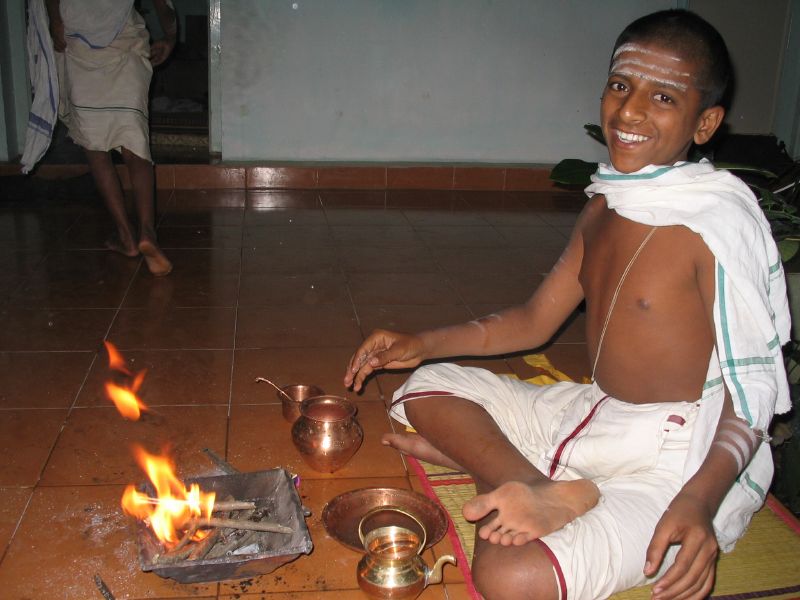 |
| Rituals can initiate newcomers into new ideas |
Exercise regimes are better designed as games and league based competitions. Rituals should make people feel valued and respected and not be long or boring.
 |
| Rituals can look silly if you are not careful |
Also, Rituals must start small and build in formality or else the formality must seem genuine right from the start. Too much formal rituals with a group that is itself not built on formal structure and rules will seem ridiculous.
 |
| Rituals can show gratitude |
Saturday, February 11, 2012
On Armor
-From Wikipedia, the free encyclopedia
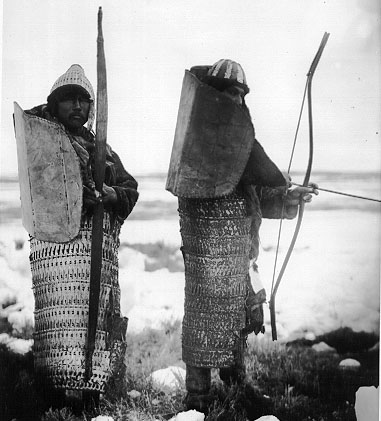
"A brigandine is a form of body armour from the Middle Ages. It is a cloth garment, generally canvas or leather, lined with small oblong steel plates riveted to the fabric."
"Lamellar armour was one of three early body armour types made from armour plates. The other two types are scale armour and laminar armour."
"Lamellar armour consists of hundreds of small rectangular iron, leather, or bronze plates (scales or lamellae) which are pierced in various locations and laced together into horizontal rows to the proper length needed to construct a particular armour item.[1] The rows of Lamellar armour evolved from scale armour,[2] from which it differs by not needing a backing for the scales. When the lames are made of leather they can be hardened by a process such as cuir bouilli or lacquering."
 For a small tribe or homestead community, defensive armor will need to be light and mobile ad not require intensive preparation methods. This will likely limit the armor's effectiveness against small arms fire, but in the event of resource shortages, this will become less of an issue as time goes on.
For small scale war, protection from hand held weapons such as blunt instruments and bladed cutting or piercing weapons will be invaluable. Obtaining armor capable of defending against firearms would be more a matter of scavenging, or preparation ahead of time, than a matter of crafting.
Leather stands out as a good alternative, as it is lighter, easier to obtain and replace and work, and quieter than metal. Metal, if used would be well served to be used in a manner similar to a Jack of Plate or Brigandine.
Bulletproofing works by using multiple layers of kevlar to slow and stop a bullet. The Chinese did this successfully with layers of paper armor against early firearms, and the Mongolians used layered silk shirts to similar effect against arrow fire. But obtaining silk or paper in large amounts could be tricky for a small community and neither technique proved effective against modern fire arms.
 And depending upon the type of conflict anticipated and the weaponry expected, forgoing armor altogether may be a wise decision. This would lighten the load of the warrior and improve mobility dramatically.
A small community might have better results relying upon stealth, foot speed, mobility and unconventional warfare tactics than armor that cannot stop a bullet.
On a different note, structures can be used as cover if they are sturdy enough. Think of heavy structures as a kind of non-mobile armor. For a small community that is thinking defensively, having reinforced structures placed strategically to provide cover in a defensive battle, but not for the attacking for the attacking force could serve as a kind of armor replacement.
Just as castles had arrow slits that protected the archer and allowed the archer a range of targets but did not do the same for the attacker, a clever tribe or homestead community could potentially build defensive cover structures to do the same, or perhaps even mobile defensive structures, or collapse-able structures that could be hidden when the defender was forced to retreat to deny the attacker access to them.

Also, do not forget to think of camouflage as armor in its own way. A warrior is hard pressed to attack what is unseen, or that of which the warrior is not aware. Being unseen, unnoticed or unregarded can be as useful as being armored.
In the movie 'Robin Hood: Prince of Thieves", several of Robin's men act as decoys to lure the knights guarding a caravan away. As the knights chase down the men, they quickly dart around a bend in the path and slide under burlap sheets that have been propped up with single sticks which the men kick over as the slide. This causes the burlap to fall over the men revealing that the top of each burlap sheet is covered with leaves and moss and earth and even a few plants, making the men appear to vanish into slight rises in the earth beside the road. The knights gallop past, assuming the men are just ahead of them on the trail.
 Mythbusters have shown the water is tremendously effective against gunfire, suggesting that local bodies of water can be used as camouflage, armor and transportation all together in one easy package. Likewise, if the tribe or homestead community is making use of earth sheltering for their homes, then they have a ready made set of bunkers that will defend well against small arms fire. Bear in mind that if the opposing force has access to military grade equipment, the standard practice against bunkers and pill boxes was to use a flamethrower.
Using predominantly natural material will render a homestead community or tribe vulnerable to fire to a certain extent. Stone and earth will not be as vulnerable, but if plant matter such as wood or thatch or sod is used in the construction of the roofing, then fire damage could expose the defenders in short order. In such cases, where one is using cover as opposed to armor, defenders should prepare to evacuate by building escape hatches into all defensive structures ahead of time.
 The Tunnels of the Vietcong and the Japanese and Iwo Jima are excellent of examples of this strategy at work. When faced with an opponent that is dramatically superior in one or more areas of strategic value, attempt to change the game so as to render those advantages unusable or even transform the enemy's advantages into liabilities.
If the enemy outnumbers you, lay out your defensive structures to nullify the advantage of large groups. If the enemy out guns you, lay out your defensive structures to prevent the use of their superior weapons as much as possible. If the enemy is better supplied than you, lay out your defensive structures to tax and expose supply lines.
 A small tribe or homestead community must rely upon and be intimately familiar with their landbase in order to live with that landbase without damaging it. As such they should consider the whole of their landbase as potential armor against attacks and prepare that landbase appropriately.
Red Cloud made excellent use of this principle in his war against the Americans, known as the Powder River War by some, and Red Cloud's war by others. Knowing that he was outnumbered and out gunned and out supplied, Red Cloud harried the US military with guerrilla strikes at homesteaders who had illegally settled on Lakota land in violation of the current treaty (and with tacit US approval), and struck at extended and exposed supply lines. He also took advantage of the military's lack of respect for his forces by sending small groups in apparent suicide attacks that would quickly turn into apparent routs with the US military in hot pursuit of the apparently beaten Lakota warriors. This would then be quickly reversed as the Lakota led the Military into ambushes such as the Battle of the 100 Slain.
Another form of armor is to not need a supply line at all. By being intimately familiar with their landbase, a tribe or homestead community should be able to abandon their settlement and still live confidently off the land and continue to harry and strike at the invaders from their pre-planned defensive structures. Both Bruce Lee and Sun Tzu spoke of the the military and combat advantage of being formless with no place for the enemy to strike at, no place to insert a sword, nothing the enemy can grab.
Another form of armor is being modular. With a central basic strategy, but no central command; the enemy has no way to end the battle quickly and decisively, and the enemy further cannot gain an advantage by capturing and interrogating a tribes warriors. A warrior cannot give up another battalions battle plans if the warrior does not know it, or expose the location of the central command if there is none.
"A brigandine is a form of body armour from the Middle Ages. It is a cloth garment, generally canvas or leather, lined with small oblong steel plates riveted to the fabric."
"Lamellar armour was one of three early body armour types made from armour plates. The other two types are scale armour and laminar armour."
"Lamellar armour consists of hundreds of small rectangular iron, leather, or bronze plates (scales or lamellae) which are pierced in various locations and laced together into horizontal rows to the proper length needed to construct a particular armour item.[1] The rows of Lamellar armour evolved from scale armour,[2] from which it differs by not needing a backing for the scales. When the lames are made of leather they can be hardened by a process such as cuir bouilli or lacquering."

For small scale war, protection from hand held weapons such as blunt instruments and bladed cutting or piercing weapons will be invaluable. Obtaining armor capable of defending against firearms would be more a matter of scavenging, or preparation ahead of time, than a matter of crafting.
Leather stands out as a good alternative, as it is lighter, easier to obtain and replace and work, and quieter than metal. Metal, if used would be well served to be used in a manner similar to a Jack of Plate or Brigandine.
Bulletproofing works by using multiple layers of kevlar to slow and stop a bullet. The Chinese did this successfully with layers of paper armor against early firearms, and the Mongolians used layered silk shirts to similar effect against arrow fire. But obtaining silk or paper in large amounts could be tricky for a small community and neither technique proved effective against modern fire arms.
A small community might have better results relying upon stealth, foot speed, mobility and unconventional warfare tactics than armor that cannot stop a bullet.
On a different note, structures can be used as cover if they are sturdy enough. Think of heavy structures as a kind of non-mobile armor. For a small community that is thinking defensively, having reinforced structures placed strategically to provide cover in a defensive battle, but not for the attacking for the attacking force could serve as a kind of armor replacement.
Just as castles had arrow slits that protected the archer and allowed the archer a range of targets but did not do the same for the attacker, a clever tribe or homestead community could potentially build defensive cover structures to do the same, or perhaps even mobile defensive structures, or collapse-able structures that could be hidden when the defender was forced to retreat to deny the attacker access to them.

Also, do not forget to think of camouflage as armor in its own way. A warrior is hard pressed to attack what is unseen, or that of which the warrior is not aware. Being unseen, unnoticed or unregarded can be as useful as being armored.
In the movie 'Robin Hood: Prince of Thieves", several of Robin's men act as decoys to lure the knights guarding a caravan away. As the knights chase down the men, they quickly dart around a bend in the path and slide under burlap sheets that have been propped up with single sticks which the men kick over as the slide. This causes the burlap to fall over the men revealing that the top of each burlap sheet is covered with leaves and moss and earth and even a few plants, making the men appear to vanish into slight rises in the earth beside the road. The knights gallop past, assuming the men are just ahead of them on the trail.

Using predominantly natural material will render a homestead community or tribe vulnerable to fire to a certain extent. Stone and earth will not be as vulnerable, but if plant matter such as wood or thatch or sod is used in the construction of the roofing, then fire damage could expose the defenders in short order. In such cases, where one is using cover as opposed to armor, defenders should prepare to evacuate by building escape hatches into all defensive structures ahead of time.
 The Tunnels of the Vietcong and the Japanese and Iwo Jima are excellent of examples of this strategy at work. When faced with an opponent that is dramatically superior in one or more areas of strategic value, attempt to change the game so as to render those advantages unusable or even transform the enemy's advantages into liabilities.
 If the enemy outnumbers you, lay out your defensive structures to nullify the advantage of large groups. If the enemy out guns you, lay out your defensive structures to prevent the use of their superior weapons as much as possible. If the enemy is better supplied than you, lay out your defensive structures to tax and expose supply lines.

Red Cloud made excellent use of this principle in his war against the Americans, known as the Powder River War by some, and Red Cloud's war by others. Knowing that he was outnumbered and out gunned and out supplied, Red Cloud harried the US military with guerrilla strikes at homesteaders who had illegally settled on Lakota land in violation of the current treaty (and with tacit US approval), and struck at extended and exposed supply lines. He also took advantage of the military's lack of respect for his forces by sending small groups in apparent suicide attacks that would quickly turn into apparent routs with the US military in hot pursuit of the apparently beaten Lakota warriors. This would then be quickly reversed as the Lakota led the Military into ambushes such as the Battle of the 100 Slain.
Another form of armor is to not need a supply line at all. By being intimately familiar with their landbase, a tribe or homestead community should be able to abandon their settlement and still live confidently off the land and continue to harry and strike at the invaders from their pre-planned defensive structures. Both Bruce Lee and Sun Tzu spoke of the the military and combat advantage of being formless with no place for the enemy to strike at, no place to insert a sword, nothing the enemy can grab.
Another form of armor is being modular. With a central basic strategy, but no central command; the enemy has no way to end the battle quickly and decisively, and the enemy further cannot gain an advantage by capturing and interrogating a tribes warriors. A warrior cannot give up another battalions battle plans if the warrior does not know it, or expose the location of the central command if there is none.
Thursday, February 9, 2012
The Future
I want to talk to you today and I want to let you know that you are the most important generation in history. And that because of that, history will remember people like you and me as history's greatest villains.
The world is in danger on multiple levels.
The evidence has been obvious for years. But only now are people starting to accept the evidence in large numbers. As a result, this generation- you and I will be blamed for the collapse that is likely coming. This is not fair, but this is how it is.
The previous generation- your parents and mine- will claim ignorance. They will say that the signs weren't clear. They are lying, of course, to save their guilty souls. The signs were clear. Our parents simply stuck their heads into the sand and passed the buck to us. Well, unfortunately for us- the buck seems to have stopped here. Our parents are busy playing denial or pass the blame or both. So we are all that's left.
And based on our performance so far- history will remember us as villains and cowards- as world breakers. In the time it has taken to say this. Another species is likely extinct, 15 will be extinct by the end of this hour, over 300 by the end of the day. Between 300 and 600 acres of rain forest will have been deforested permanently. Almost 300 people will have been born, onto a planet whose population has gone from 1.5 billion to 6.7 billion is roughly 100 years.
Species extinction, deforestation and associated ecosystem destruction, overpopulation.
Why do we allow this?
Because its too big? Because we need to make a living? Because we have bills to pay and assignments to hand in? Because time spent saving the world means an F in biology or not paying the cable bill?
How dare we.
The world is in danger on multiple levels.
The evidence has been obvious for years. But only now are people starting to accept the evidence in large numbers. As a result, this generation- you and I will be blamed for the collapse that is likely coming. This is not fair, but this is how it is.
The previous generation- your parents and mine- will claim ignorance. They will say that the signs weren't clear. They are lying, of course, to save their guilty souls. The signs were clear. Our parents simply stuck their heads into the sand and passed the buck to us. Well, unfortunately for us- the buck seems to have stopped here. Our parents are busy playing denial or pass the blame or both. So we are all that's left.
And based on our performance so far- history will remember us as villains and cowards- as world breakers. In the time it has taken to say this. Another species is likely extinct, 15 will be extinct by the end of this hour, over 300 by the end of the day. Between 300 and 600 acres of rain forest will have been deforested permanently. Almost 300 people will have been born, onto a planet whose population has gone from 1.5 billion to 6.7 billion is roughly 100 years.
Species extinction, deforestation and associated ecosystem destruction, overpopulation.
Why do we allow this?
Because its too big? Because we need to make a living? Because we have bills to pay and assignments to hand in? Because time spent saving the world means an F in biology or not paying the cable bill?
How dare we.


Subscribe to:
Posts (Atom)